by Violet Theodore
The Manukau Symphony Orchestra and its Role in Promoting New Zealand Composers
by Violet Theodore
“Music with all its subtlety has immense power to unite people, spread love and bring peace in the world!” — Sanchita Pandey
Music is a universal language that brings people together irrespective of any background or culture that they belong to. Campaigns that support local composers are currently very much needed because pushing artistic boundaries means creating a diverse cultural landscape that brings communities together, inspiring future generations. In the digital age, music is easily accessible and people can forget to support local composers. However, we should remember that it is they who tell the stories of our community. They sketch our history, struggles, achievements and perspectives in music which ultimately add up to our identity as a culture.
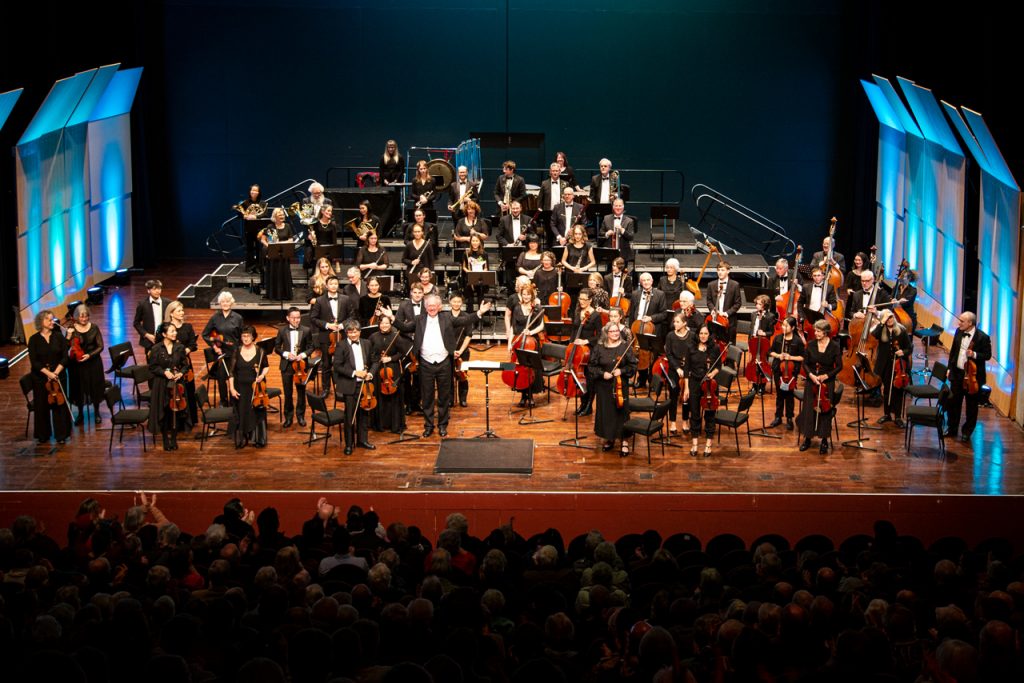
The Manukau Symphony Orchestra (MSO), established in 1993, holds a place of significance in New Zealand’s musical landscape. It is a community orchestra that combines European traditions with local cultural identities in the diverse region of South Auckland. This essay will explore the Manukau Symphony Orchestra’s dedication to supporting and promoting local composers through various initiatives, performances, and engagement with the community.
Since its foundation as a 22-piece ensemble, the MSO has grown into a full orchestra with over 80 members, including professional musicians, amateur community players, and students who have been awarded scholarships to help them on their orchestral journey. The orchestra has always actively supported and commissioned works from New Zealand composers as part of its mission to feature New Zealand artists in every concert. It is felt that the musicians benefit from exposure to new compositions, expanding their skill sets, and while audiences enjoy widely known works, their engagement is enhanced when challenged by exposure to new works (Grodd & Lines, 2018).
The conductor of the MSO, Uwe Grodd, has served as the inaugural Music Director since 1993. Uwe, both a conductor and flautist, has an impressive musical background which includes more than 35 recordings with Naxos Records, along with various collaborations with the New Zealand Symphony Orchestra, helping establish his reputation in a competitive musical landscape. He is a passionate advocate for New Zealand music who believes that the impact of local compositions resonates deeply with both musicians and audiences. He has commissioned over 50 works from New Zealand composers throughout his career. Uwe believes that the significance of local compositions extends beyond mere performance; it is crucial to the preservation of New Zealand’s cultural identity. By presenting contemporary works, we document and save the stories of our era, reflecting social issues and histories. Music is a means by which we are able to convey deeply individual and communal experiences, speaking to the political and emotional landscape of our society (U. Grodd, personal communication, March 9, 2025).
One of the earlier initiatives established by the MSO aimed at promoting local composers was in 2008 when Anthony Richie held the position of Composer-in-Residence with the orchestra (Sounz, 2023). His work, Procession, was commissioned by the orchestra and written for the orchestra’s April concert that year. The music aimed to evoke street processions such as Santa parades or graduations with its energy and solid marching rhythms, thus painting a typical scene from New Zealand’s culture. In addition to this, special concerts dedicated to local composers, like Opeloge Ah Sam’s We Are Pasifika, in 2013 and Tim Finn’s Star Navigator, in 2021, have shown the orchestra’s strong commitment to celebrating New Zealand talent (Taber, personal communication, March 3, 2025). More recently, the MSO commissioned composer, Selina Fischer, to arrange her piece, Kintsugi for piano trio, for the orchestra to perform in November, 2022 (S. Robertson, personal communication, April 20, 2025). This work has since received international recognition (Fischer, 2025). The orchestra has also collaborated with composer David Hamilton on his first symphony, Manukau Songs, (August 2023), which is a choral symphony that features poetry in Te Reo Maori alongside the poetry of Manukau-based poet, Yvonne Amery (Hamilton, 2024). This year the MSO performed Adrien De Croy’s first symphony, The Resolute, after Uwe Grodd encouraged the composer to write a larger work. Previously the orchestra had performed smaller works by De Croy with great reception from musicians and audience members alike. Although much effort goes into staging these works, some of them taking years to develop, these initiatives show the MSO’s dedication to showcasing new voices and ensuring their narratives are heard. In addition to this, the MSO has taken its promotion of local composers beyond the concert hall by creating video recordings of their performances, allowing people to enjoy the music online. This not only raises awareness of their music but also builds a community that supports and appreciates contemporary music. In today’s world, where being seen is important, these efforts play a vital role in keeping a composer’s career alive and thriving.
To gain a deeper understanding of the important work the MSO does to support local composers, it helps to look at it from the composer’s point of view. David Hamilton (born 1955), is a prominent Auckland-based composer whose work is widely performed. He is also a choral conductor with community choirs, hence his interest in composing works for orchestra and choir combined, such as his first symphony, mentioned earlier. This collaboration is a perfect example of the synergy that can exist between a composer and ensemble. In celebration of the orchestra’s 30th anniversary, he was invited to write a new work. This project marked the third collaboration between David and the orchestra, following two shorter fanfare pieces he had composed previously. His relationship with Uwe Grodd further facilitated this collaboration. With a shared history through the Auckland Choral (Hamilton, 2024), where Grodd had conducted several of David’s works, understanding between them allowed for a seamless creative partnership. David’s eagerness to compose for choir and orchestra was met with enthusiasm from Grodd, underscoring the value of mutual respect and collaborative spirit in the world of contemporary music. In David’s opinion (D. Hamilton, personal communication, March 3, 2025), live performances of one’s works are important in order to become accustomed to the relative proportion and combination of the musical elements involved. Sterile digital renderings of compositions cannot evoke real emotional responses from the listener as live concerts do. The interaction between the composer, performers and audience is vital because it enriches the whole experience, fostering greater engagement with contemporary works. Though rehearsals provide an added opportunity for fine tuning, David says (Hamilton, 2025) that by this point the piece is mostly finished, although subtle adjustments can still be made in rehearsals. Finally, the quality of the orchestra’s performance impacts audience reception hugely. David (Hamilton, 2025) admits that a high-quality performance can elicit a strong response from the audience, shaping their overall experience. He has often received positive receptions from the MSO’s performances of his works, at times resulting in lengthy encores, demonstrating the joy his music can bring. This ability to engage listeners, even when some aspects of the music may puzzle them, demonstrates the importance of supporting local composers and bringing their music to the community.
Adrien De Croy (born 1968) is another local composer with a strong connection to the MSO through his relationship with Uwe Grodd. He started composing seriously in 2018 after several years of arranging music for ensembles he performed with (S. Girling, 2025). De Croy’s aspiration to improve his orchestral compositions compelled him to seek mentorship from Grodd. Their collaboration was rewarding for De Croy because it allowed him access to live performance of his works through the orchestra (De Croy, personal communication, March 1, 2025). Similar to Hamilton, he quickly recognised the importance of orchestral rehearsals as a means to refine his compositions by utilising the feedback he received. It is interesting to note that great composers such as Tchaikovsky and Sibelius also went through the process of revising their works based on what they learned during rehearsals. Along with the live performances of De Croy’s works, the MSO has helped boost his profile as a composer through marketing efforts such as social media campaigns and interviews. In terms of audience responses to his music, De Croy (De Croy, 2025) recalled a special performance where an audience member’s emotional reaction showed the impact of his music on listeners.
To obtain a broader understanding of the impact of performing works by local composers, it is helpful to consider it from the perspective of the orchestral musicians. Yid-ee Goh has been an integral part of the MSO for around six years, serving as a guest concertmaster. His role not only allows him to lead but also to create a cooperative environment that benefits both the musicians and the composer. This collaboration allows open discussion of concepts and interpretations. Goh’s background as a concertmaster is vital at times when he needs to clarify notation, readability and instrumental techniques with the composer in order to facilitate clarity in performance. Navigating these challenges in rehearsals can help bring the composer’s intentions to life effectively. For example, when a composer is less experienced in writing for string instruments, Goh is a precious asset. According to Goh (Y. Goh, personal communication, March 13, 2025), performing music by local composers offers a unique connection to the music, allowing musicians to better understand New Zealand’s rich culture. Reception of these works from the audience is usually extremely favourable and such settings allow more intimate connections between audiences and performers, supporting greater appreciation of the art on offer. Goh (Goh, 2025) is convinced that the MSO’s emphasis on supporting local composers has been pivotal in promoting awareness and appreciation of New Zealand music within the community. Such collaborations not only enrich the experience of the musicians but also enhance the quality of the works being performed. Goh (Goh, 2025) believes that he has discovered new sounds and expressions on the violin, fostering his growth as a musician, through performing contemporary music.
According to seasoned MSO viola player, Helen Taber (H. Taber, personal communication, March 3, 2025), feedback from local composers regarding the orchestra’s support is overwhelmingly supportive. Composers greatly appreciate receiving commissions for new works to be performed by the orchestra. She (Taber, 2025) believes the MSO’s promotion of local composers has influenced the local music scene, inspiring young composers to create orchestral works. Listening to or performing contemporary music is a learning experience that can stretch one’s perceptions beyond traditional boundaries.
The MSO has been a key force in shaping and expressing New Zealand’s cultural identity through maintaining its commitment to performing works by local composers. Throughout the history of the orchestra there have been many notable performances that have shown the strength of music as a unifying force within the community. This has been evident in spontaneous haka performances by young audience members at school concerts, showing how music can form ties that cut across generations (U. Grodd, 2025). These performances are the very essence of cultural heritage and by sharing the unique voices of New Zealand composers, the MSO contributes to the a rich cultural tapestry that reflects the diverse experiences of its people.
Moving forward, the MSO remains dedicated to nurturing the next generation of local composers, enabling their stories to be enjoyed and heard. It is important for young composers to record and share their works in order to leave a cultural legacy that will be available to future generations of New Zealanders (U. Grodd, 2025). Works of today will be artifacts of tomorrow, not only offering insights to the artistry of composers, but also the complexities and nuances of the period in which they were composed. The MSO will continue to encourage young composers to take this opportunity to have a meaningful influence on the world of music and its place in the wider community.
In conclusion, the Manukau Symphony Orchestra is a vibrant testament to the power of music as a unifying force for its community to celebrate its cultural heritage. Through its unwavering commitment to performing music by New Zealand composers, the orchestra enriches the lives of both its audiences and musicians, while preserving the valuable work of local artists and allowing their stories to be told. In its quest to nurture emerging talent, the orchestra plays a key role in shaping the future of New Zealand music. The creative journey is often a team effort and the influence of other musicians can be a powerful force towards success for composers. By sharing their music and allowing it to develop through collaboration with the MSO, local composers can capture the essence of their time and guide future generations to love and appreciate New Zealand’s rich cultural heritage.
Bibliography:
Interviews with the following people, all conducted in 2025:
Uwe Grodd, March 9, 2025, (Conductor MSO)
David Hamilton, March 3, 2025 (New Zealand Composer)
Adrien De Croy, March 1, 2025 (New Zealand Composer)
Yid-ee Goh, March 13, 2025 (Guest Concertmaster MSO)
Helen Taber, March 3, 2025 (Viola Player and intermittent section leader since MSO foundation)
Shelley Robertson, April 20, 2025 (General Manager MSO)
Websites:
https://uwegrodd.com/wp-content/uploads/2020/05/Grodd-and-Lines-MSO-article-2.pdf
https://www.salinafisher.com/about